
Order of operations, estimating and remainders
What this lesson covers
- Rounding, estimation, and using benchmarks support comparing numbers and checking whether findings are reasonable.
- Division can result in a remainder expressed as a whole number, fraction, or decimal.
- In expressions that have more than one operation, the order of operations is important.
- A mnemonic, such as GEMA: grouped, exponents, multiplicative (× and ÷), and additive (+ and −) can be used to remember the order of operations.
Two people, one sum, two answers
- Work out 3 + 4 × 2.
- Straight along the line you get 14.
- Somebody else gets 11. One of you is wrong.
| Method | Working | Gets |
|---|---|---|
| Left to right | 3 + 4 = 7, then 7 × 2 | 14 |
| By the rules | 4 × 2 = 8, then 3 + 8 | 11 |
The order everything follows
- Grouped, exponents, multiplicative, additive. GEMA.
- You may have met BEDMAS. It is the same order.
- GEMA is safer, because M and A each name a pair.
| Stands for | Meaning | |
|---|---|---|
| G | Grouped | anything inside brackets |
| E | Exponents | squares, cubes, roots |
| M | Multiplicative | × and ÷, left to right |
| A | Additive | + and −, left to right |
G: brackets go first, always
- Anything inside brackets is settled before anything else.
- 3 + 4 × 2 is 11. But (3 + 4) × 2 is 14.
- Brackets are how you overrule the order on purpose.
| Expression | Why | Answer |
|---|---|---|
| 3 + 4 × 2 | no brackets | 11 |
| (3 + 4) × 2 | brackets first | 14 |
| Same digits | different instruction |
E: then squares, cubes and roots
- An exponent is settled before any × or ÷ touches it.
- In 3² × 2, the 3² becomes 9 first.
- Then 9 × 2. Never 3 × 2 squared.
| Expression | Step | Becomes |
|---|---|---|
| 3² × 2 | square the 3 | 9 × 2 |
| then multiply | 18 | |
| Not | (3 × 2)² | 36 |
M: and here is where people slip
- × and ÷ do not take turns. They rank equally.
- So you go left to right. 20 ÷ 4 × 5 starts with 20 ÷ 4.
- That is 5, then 5 × 5 is 25. Not 1.
| Step | Why | Gives |
|---|---|---|
| 20 ÷ 4 × 5 | left to right | |
| 20 ÷ 4 | first, because it is leftmost | 5 |
| 5 × 5 | then this | 25 |
| Common error | doing 4 × 5 first gives | 1 |
A: exactly the same trap
- + and − also rank equally, so also left to right.
- 10 − 3 + 2 starts with 10 − 3, which is 7.
- Then 7 + 2 is 9. Adding first would give 5.
| Step | Why | Gives |
|---|---|---|
| 10 − 3 + 2 | left to right | |
| 10 − 3 | first | 7 |
| 7 + 2 | then | 9 |
| Common error | doing 3 + 2 first gives | 5 |
All four letters at once
- 2 + 3² × 2. No brackets, so start at E.
- 3² is 9, giving 2 + 9 × 2.
- M next: 9 × 2 is 18. Then A: 2 + 18 = 20.
| Expression | Step | Becomes |
|---|---|---|
| 2 + 3² × 2 | E: 3² = 9 | 2 + 9 × 2 |
| M: 9 × 2 = 18 | 2 + 18 | |
| A: add | 20 |
Try it: one tier at a time
When the answer goes below zero
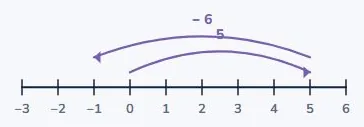
- 5 − 2 × 3. The multiplication is first.
- 2 × 3 is 6, so this is 5 − 6.
- Which is −1. Order of operations does not avoid negatives.
Now: knowing the answer before you get it
- A calculator will happily return a wrong answer.
- It cannot tell you that you typed 147 instead of 14.7.
- So decide roughly what it must be, first.
| Catches | |
|---|---|
| A rough guess | nothing much |
| An upper and lower bound | a misplaced decimal point |
| Nothing at all | nothing |
Trapping 14.7 × 5 between two easy sums
- 14.7 is between 14 and 15.
- 14 × 5 is 70. 15 × 5 is 75.
- So the answer must be between 70 and 75. It is 73.5.
| Benchmark | Compared | Value |
|---|---|---|
| 14 × 5 | too small | 70 |
| 15 × 5 | too big | 75 |
| So 14.7 × 5 | must be between them | 70 to 75 |
| Actual | 73.5 |
Rounding to any power of ten
- 4728 to the nearest 10 is 4730.
- To the nearest 100 it is 4700.
- To the nearest 1000 it is 5000. The 7 rounds the 4 up.
| Number | To the | Becomes |
|---|---|---|
| 4728 | nearest 10 | 4730 |
| 4728 | nearest 100 | 4700 |
| 4728 | nearest 1000 | 5000 |
Try it: round to a power of ten
And to any decimal place
- Same method, going the other way down the ladder.
- 3.14159 to a tenth is 3.1, to a hundredth 3.14.
- To a thousandth, 3.142. Look at the digit just past.
| Number | To the | Becomes |
|---|---|---|
| 3.14159 | nearest whole | 3 |
| 3.14159 | nearest tenth | 3.1 |
| 3.14159 | nearest hundredth | 3.14 |
| 3.14159 | nearest thousandth | 3.142 |
The zero you have to write
- Round 2.798 to the nearest hundredth.
- The 8 rounds 9 up to 10, which carries. You get 2.80.
- Write the zero. 2.8 is the same value but shows no hundredths.
| Answer | Shows | Verdict |
|---|---|---|
| 2.80 | hundredths, as asked | right |
| 2.8 | tenths only | marked wrong |
Dividing when it does not go evenly
- 327 ÷ 15. How many 15s fit into 327?
- 15 × 20 is 300, and one more 15 makes 315.
- So 21 of them, with 12 left over.
| Form | Working | Answer |
|---|---|---|
| Whole number | 15 × 21 = 315, 12 left over | 21 r 12 |
Three ways to write what is left over
- As a whole number: 21 remainder 12.
- As a fraction: 12 out of 15 is 4/5, so 21 4/5.
- As a decimal: 4/5 is 0.8, so 21.8. All three are right.
| Form | Working | Answer |
|---|---|---|
| Whole number | 15 × 21 = 315, 12 left over | 21 r 12 |
| Fraction | 12 out of 15 is 4/5 | 21 4/5 |
| Decimal | 4/5 is 0.8 | 21.8 |
Which one the question wants
- Buses for 327 people: you cannot run 0.8 of a bus. 22.
- Sharing $327: money wants the decimal.
- Cutting 327 cm: the fraction is exact. Read the context.
| Situation | Why | Use |
|---|---|---|
| Buses for 327 people | you cannot run 0.8 of a bus | 22 buses |
| Sharing $327 | money takes decimals | $21.80 |
| Cutting 327 cm | a fraction is exact | 21 4/5 cm |
Common mistakes
- 3 + 4 × 2 = 14Multiplication comes before addition, so 4 × 2 = 8 first, then 3 + 8 = 11.
- 20 ÷ 4 × 5 = 1× and ÷ rank equally, so go left to right: 20 ÷ 4 = 5, then 5 × 5 = 25.
- 10 − 3 + 2 = 5+ and − rank equally, so go left to right: 10 − 3 = 7, then 7 + 2 = 9.
- 327 ÷ 15 = 21 r 12, so as a decimal it is 21.12The remainder is 12 out of 15, so 327 ÷ 15 = 21 12/15 = 21 4/5 = 21.8.
Your turn: eight questions
- Try all eight.
- Question 2 is the left-to-right one. Take your time.
- Question 3 wants two decimal places in the answer.
Work out 6 + 2 × 5.
Work out 18 ÷ 3 × 2.
Round 2.798 to the nearest hundredth.
Work out 50 ÷ 8, three ways.
Round 36,482 to the nearest 1000.
Before calculating 6.8 × 9, between which two benchmarks must the answer lie?
130 people are going waka ama, and each waka seats 6. How many waka are needed so everyone gets a seat?
Work out 20 − (2 + 1)² × 2.
Show answer
1. 16. The multiplication goes first: 2 × 5 = 10, then 6 + 10. 2. 12. Left to right, so 18 ÷ 3 = 6 first, then 6 × 2. Doing 3 × 2 first gives 3, which is the error this lesson is built around. 3. 2.80. The 8 in the thousandths rounds the hundredths up from 9 to 10, which carries. Write the trailing zero: 2.8 is the same value but does not show hundredths. 4. 6 remainder 2, or 6 1/4, or 6.25. 5. 36,000. The hundreds digit is 4, which is less than 5, so the thousands digit stays as 6. 6. Between 54 and 63. 6.8 sits between 6 and 7, and 6 × 9 = 54 while 7 × 9 = 63. 7. 22 waka. 130 ÷ 6 is 21 remainder 4, and those 4 people still need a waka, so round up. 8. 2. G: 2 + 1 = 3. E: 3² = 9. M: 9 × 2 = 18. A: 20 − 18 = 2.
The answers
- 6 + 2 × 5 is 16, because 2 × 5 goes first.
- 18 ÷ 3 × 2 is 12, left to right. Not 3.
- 2.798 to a hundredth is 2.80. And 50 ÷ 8 is 6.25.
| Answer | |
|---|---|
| 1 | 16 |
| 2 | 12 |
| 3 | 2.80 |
| 4 | 6 r 2, or 6 1/4, or 6.25 |
What to take away
- GEMA, and the M and A each cover a pair that runs left to right.
- Bracket an answer above and below before you calculate it.
- A remainder has three forms. The context picks one.
| Remember | |
|---|---|
| GEMA | grouped, exponents, multiplicative, additive |
| M and A | each name a pair, and pairs run left to right |
| Brackets | the only way to overrule the order |
| Estimate | bracket it above and below, then calculate |
| A remainder | whole, fraction or decimal, as the question needs |
Challenge
Mere picks a whole number between 100 and 200. When she divides it by 8, her calculator shows a decimal ending in .375. When she divides it by 6 and writes the answer as a mixed number in simplest form, the fraction part is 12. When she divides it by 5, the remainder is 2. (a) What is her number? (b) Write her number ÷ 12 in all three forms: with a remainder, as a mixed number in simplest form, and as a decimal. (c) Explain why dividing a whole number by 6 can never give a decimal ending in .25.
Hint
Turn each clue into a remainder. A decimal part of .375 is 38, so what is left over when you divide by 8? A fraction part of 12 when dividing by 6 is how many sixths?
Answer
(a) 147. (b) 147 ÷ 12 = 12 r 3 = 12 14 = 12.25. (c) The remainder when dividing by 6 can only be 0 to 5, giving decimal parts 0, 0.1666..., 0.333..., 0.5, 0.666... or 0.8333..., and 0.25 is not one of them.
Step by step
- 0.375 is 38, so dividing by 8 leaves a remainder of 3.
- 12 is 36, so dividing by 6 also leaves a remainder of 3.
- So the number take away 3 is a multiple of both 8 and 6, which means a multiple of 24. Between 100 and 200 that gives 123, 147, 171 or 195.
- Dividing those by 5 leaves 3, 2, 1 and 0. Only 147 leaves 2, so Mere's number is 147.
- 147 ÷ 12 is 12 with 3 left over (12 × 12 = 144). 3 out of 12 is 14, so 12 14, which is 12.25.
- Dividing by 6, the remainder is 0, 1, 2, 3, 4 or 5, so the part after the point is 0, 16, 13, 12, 23 or 56 of one. As decimals those are 0, 0.1666..., 0.333..., 0.5, 0.666... and 0.8333.... A decimal part of 0.25 would need 14, which is 1.5 sixths, and a remainder must be a whole number.
Full working
- 0.375 = 38, so ÷ 8 leaves 3decimal part back to a remainder
- 12 = 36, so ÷ 6 leaves 3same remainder
- number − 3 is a multiple of 24: 123, 147, 171, 195lowest common multiple of 8 and 6 is 24
- 123 r 3, 147 r 2, 171 r 1, 195 r 0 when ÷ 5only 147 fits
- 147 = 12 × 12 + 3 → 12 r 3 = 12 312 = 12 14 = 12.25312 simplifies to 14
- ÷ 6 decimal parts: 0, 0.1666..., 0.333..., 0.5, 0.666..., 0.8333...0.25 would need 1.5 sixths
- (a) 147; (b) 12 r 3, 12 14, 12.25; (c) no remainder gives 0.25
(a) How many whole numbers from 1000 to 9999 give the same answer when rounded to the nearest 10 as when rounded to the nearest 100, but a different answer when rounded to the nearest 1000? What are the smallest and largest of them? (b) How many whole numbers from 1000 to 9999 give the same answer to the nearest 10, the nearest 100 and the nearest 1000?
Hint
Try a few: 3697 → 3700 and 3700, but 3694 → 3690 and 3700. The nearest 10 and the nearest 100 only agree when the nearest 10 is itself a hundred. Which numbers round to 3700 at the nearest 10?
Answer
(a) 810 numbers, smallest 1095, largest 9904. (b) 90 numbers.
Step by step
- Rounding to the nearest 100 always gives a multiple of 100. So the two answers agree only when the nearest 10 is already a multiple of 100.
- A number rounds to a hundred, say 3700, at the nearest 10 when it is from 3695 to 3704. That is 10 numbers for each hundred.
- For the nearest 1000 to be different, that hundred must not be a whole thousand. The hundreds from 1100 to 9900 that are not thousands are 89 − 8 = 81 of them, giving 81 × 10 = 810 numbers.
- The smallest is 1095 (it rounds to 1100, 1100 and 1000). The largest is 9904 (9900, 9900 and 10 000).
- For (b) the number must be within 5 of a whole thousand: 1000 to 1004 (5 numbers), 10 numbers around each of 2000 to 9000 (80 numbers), and 9995 to 9999, which all round to 10 000 (5 numbers). That is 90.
Full working
- nearest 10 = nearest 100 only when the nearest 10 is a multiple of 100the nearest 100 is always a hundred
- rounds to 3700 at the nearest 10: 3695 to 370410 numbers per hundred
- hundreds 1100 to 9900: 89; take away 2000, 3000, ..., 9000: 81the nearest 1000 must differ
- 81 × 10 = 810smallest 1095, largest 9904
- within 5 of a thousand: 5 + 8 × 10 + 5 = 901000 to 1004, then 1995 to 2004 up to 8995 to 9004, then 9995 to 9999
- (a) 810, from 1095 to 9904; (b) 90
Tama's old calculator ignores GEMA and works strictly from left to right. Ana works out 12 − d × 2 + 8 ÷ 4 using GEMA, and Tama types the same thing into his calculator, where d is a single digit from 0 to 9. (a) For which digit d do they get the same answer? (b) When d = 7, Tama's calculator does a division that does not come out evenly. Write that division in all three forms: remainder, fraction and decimal. What does Ana get when d = 7? (c) Explain why only one digit makes their answers match.
Hint
Make a table: d down the side, Ana's answer and Tama's answer across. Watch how much each answer changes when d goes up by 1.
Answer
(a) d = 4, both get 6. (b) 18 ÷ 4 = 4 r 2 = 4 12 = 4.5; Ana gets 0. (c) Ana's answer falls by 2 each time d goes up 1, but Tama's falls by only 12, so they can cross only once.
Step by step
- Ana does d × 2 and 8 ÷ 4 first, so her answer is 12 − 2d + 2. For d = 0 that is 14, and it drops by 2 for every 1 that d goes up.
- Tama does 12 − d first, then × 2, then + 8, then ÷ 4. For d = 0 that is (24 + 8) ÷ 4 = 8, and it drops by 12 for every 1 that d goes up.
- Ana starts 6 higher and catches up 1 12 each step, so they meet after 6 ÷ 1 12 = 4 steps: d = 4. Check: Ana 12 − 8 + 2 = 6; Tama 8 × 2 = 16, 16 + 8 = 24, 24 ÷ 4 = 6.
- For d = 7, Tama gets 5 × 2 = 10, then 18, then 18 ÷ 4 = 4 r 2, which is 4 24 = 4 12 = 4.5. Ana gets 12 − 14 + 2 = 0.
- After d = 4, Ana's answer is below Tama's and keeps falling faster, so they never meet again.
Full working
- Ana: 12 − 2d + 2GEMA: × and ÷ before − and +
- Tama: ((12 − d) × 2 + 8) ÷ 4strictly left to right
- d = 0: Ana 14, Tama 8; each step Ana −2, Tama −12gap of 6 closes by 1 12 each step
- d = 4: Ana 12 − 8 + 2 = 6, Tama (8 × 2 + 8) ÷ 4 = 24 ÷ 4 = 6gap closed after 4 steps
- d = 7: Tama (5 × 2 + 8) ÷ 4 = 18 ÷ 4 = 4 r 2 = 4 12 = 4.5; Ana 12 − 14 + 2 = 0remainder 2 out of 4
- (a) d = 4; (b) 4 r 2, 4 12, 4.5, and Ana gets 0
Practise this
Report a mistake
More in Number
 Powers of ten, in both directions7 min
 Powers, roots and prime factors7 min
 Integers: below zero and back again7 minOrder of operations, estimating and remainders8 min
 Fractions, decimals and percentages7 min
 Decimals, fractions of amounts, and working backwards7 min
 Ratios, and finding the whole from a part7 min
 Comparing money plans, and taking a discount off7 min